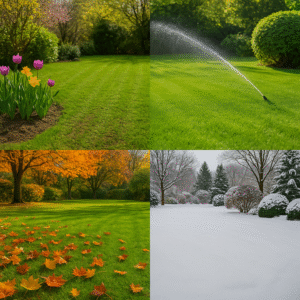
Every homeowner wants a lush, green lawn that turns heads in the neighborhood. But while it may seem simple, lawn care can be tricky—and even small mistakes can lead to thinning grass, weeds, pests, or expensive repairs. Many DIY homeowners unknowingly sabotage their lawns with habits that do more harm than good.
To help you keep your lawn looking its best, here are the most common lawn care mistakes—and how to avoid them.
❌ Mistake #1: Cutting Grass Too Short (a.k.a. Scalping)
Many people think mowing shorter means they won’t have to mow as often. Unfortunately, this weakens the lawn.
- Why it’s bad: Cutting grass too short removes too much of the blade, limiting photosynthesis. It also exposes soil to the sun, encouraging weeds.
- Best practice: Keep cool-season grasses around 3 inches tall, and warm-season grasses between 2–2.5 inches. Taller grass shades roots and helps conserve moisture.
👉 Professional Tip: Never cut more than one-third of the grass blade in a single mowing.
❌ Mistake #2: Overwatering or Underwatering
Water is essential, but too much or too little will stress your lawn.
- Overwatering: Leads to shallow roots, fungus growth, and wasted water.
- Underwatering: Causes grass to go dormant, dry out, and die.
Best practice:
- Water 1 inch per week, either from rainfall or irrigation.
- Water deeply but infrequently to encourage deep root systems.
- Always water early in the morning to reduce evaporation and fungal risk.
❌ Mistake #3: Ignoring Soil Health
Grass health begins with the soil. Many homeowners focus only on mowing and watering but skip soil testing.
- Why it matters: Soil pH and nutrient levels determine how well grass grows.
- Best practice: Test your soil every 2–3 years. Add lime if it’s too acidic, or sulfur if it’s too alkaline. Use fertilizers based on what your soil actually needs—not guesswork.
❌ Mistake #4: Using Too Much Fertilizer
Fertilizer helps, but too much can actually kill grass.
- Signs of over-fertilizing: Yellow or burnt patches, excess thatch buildup, and chemical runoff into waterways.
- Best practice: Fertilize 3–4 times per year using a slow-release formula. Always follow package instructions and apply evenly.
❌ Mistake #5: Neglecting Aeration
Compacted soil prevents air, water, and nutrients from reaching roots. Most homeowners never aerate, but it’s crucial for lawn health.
- Best practice: Aerate once a year, ideally in the fall or spring. Overseed after aeration for maximum benefit.
❌ Mistake #6: Skipping Weed & Pest Prevention
Waiting until weeds take over or pests destroy your lawn is a costly mistake.
- Weeds: Crabgrass, dandelions, and clover thrive in stressed lawns.
- Pests: Grubs, chinch bugs, and sod webworms feed on roots and grass blades.
Best practice:
- Apply pre-emergent herbicides in spring.
- Treat pest infestations early with targeted control.
- Maintain healthy grass, which naturally crowds out weeds.
❌ Mistake #7: Ignoring Seasonal Needs
Lawns have different needs in spring, summer, fall, and winter.
- Spring: Fertilize and overseed thin patches.
- Summer: Mow higher and water deeply.
- Fall: Aerate, overseed, and apply winterizing fertilizer.
- Winter: Avoid heavy traffic on dormant grass.
👉 Professional Tip: A year-round maintenance plan prevents costly lawn restoration later.
❌ Mistake #8: Neglecting Edging & Clean-Up
A lawn may be green, but without clean edges, it looks unfinished. Overgrown walkways and messy debris detract from curb appeal.
- Best practice: Edge walkways and driveways regularly. Rake leaves in fall to prevent mold and suffocation.
❌ Mistake #9: Thinking All Grass Is the Same
Planting the wrong type of grass for your region or lawn conditions sets you up for failure.
- Best practice: Choose grass suited to your climate (cool-season vs warm-season). Consider sun exposure, soil type, and foot traffic when selecting seed.
✅ Final Thoughts
A healthy lawn doesn’t happen by accident—it takes the right techniques at the right time. Avoiding these common mistakes can save you money, reduce stress, and keep your lawn looking picture-perfect.
Want guaranteed results?
👉 [Contact us today] for professional lawn care services that take the guesswork out of maintenance.